
General Disclosures
General basis for preparation of the sustainability statement (BP-1)
Galapagos NV is a limited liability company incorporated in Belgium with its registered office at Generaal De Wittelaan L11 A3, 2800 Mechelen, Belgium. In the notes to the consolidated sustainability statements, references to “we”, “us,” “the group” or “Galapagos” include Galapagos NV together with its subsidiaries. The scope of this report and the subsequent financial and sustainability statements are identical to and consolidated at the level of Galapagos NV, which means that the information is exclusively related to us and – where available – our value chain. No subsidiary undertakings are exempt from consolidated sustainability reporting pursuant to Article 29a of Directive 2013/34/EU. We refer to note 34 of the financial statements for a list of consolidated companies.
The sustainability statement provides an overview of our approach on how we identify and report on our material sustainability topics for the financial year 2025. In preparing the sustainability statement, we have considered the expectations of our stakeholders to ensure that it addresses the topics identified as material to them. We conducted a double materiality assessment covering the entire value chain. As a consequence, this sustainability statement covers both upstream and downstream Impacts, Risks and Opportunities (IROs). The mapping of Our Value Chain can be found here.
No relevant material information was omitted from the statement, except information related to intellectual property due to its classified and sensitive information, in accordance with ESRS 1 section 7.7.
The inclusion of information and data in the sustainability statements is not an indication that such information or data, or the subject matter of such information or data, is material to us for purposes of applicable securities laws or otherwise. The principles used to determine whether to include information or data in this report do not correspond to the principles of materiality or disclosure contained in the United States (U.S.) securities laws used to determine whether disclosures are required to be made in filings with the U.S. Securities and Exchange Commission (SEC), or principles applicable to the inclusion of information in financial statements.
Disclosures in Relation to Specific Circumstances (BP‑2)
Strategic reorganisation
During FY25, we underwent significant organizational change. Firstly, on January 8, 2025 we announced that we would discontinue our small molecule discovery programs and reorganize our business to focus on long-term value creation in cell therapy in oncology. Thereafter, on October 21, 2025, we announced that we intended to wind down our cell therapy activities following a comprehensive strategic review to evaluate the long-term sustainability of our business model and R&D portfolio. This assessment concluded that a strategic repositioning was required to secure a more resilient and sustainable path for future value creation. Based on this assessment, the Board decided, implemented as of 2026, to wind down our cell therapy activities and reorient the business towards transformative business development opportunities, supported by disciplined capital allocation aimed at building a pipeline of novel therapeutics that can deliver meaningful benefits for patients and long-term value for shareholders. The wind‑down affects approximately 365 employees across Europe, the U.S. and China and results in the closure of the sites in Leiden (the Netherlands), Basel (Switzerland), Princeton and Pittsburgh (U.S.), and Shanghai (China). These developments were taken into account in the 2025 update of our double materiality assessment, including the updated materiality of the S1 “Secure employment” sub‑topic and the review of topic relevance in light of the year’s organizational changes.
Use of estimates, assumptions and data sources
Most of the quantitative data included in this report have been directly sourced from our systems. Any data obtained through alternative methods, such as estimations or extrapolations within our value chain, are clearly identified as such and include a degree of estimation uncertainty. For the categories where estimation was involved, the level of management uncertainty is all together low, resulting in a high level of accuracy. The basis of preparation, accuracy levels, estimation of outcome uncertainty, and, where applicable, planned actions to improve the accuracy and reduce uncertainty in future annual reports are disclosed for each material topic in the topical reporting sections of this report.
Changes in preparation or presentation of sustainability information
Regarding our carbon footprint calculations, we incorporated additional data sources to improve accuracy. As a result the following restatements have been made in respect of 2024 data:
The FY2024 gross Scope 1 emissions have been restated due to an error in the mobile combustion calculation. Additionally, the calculation method for mobile combustion was further refined in FY2025 due to more accurate data available and applied retrospectively to the FY2024 data. The difference between the figures reported in prior year and the restated comparative data is an increase by 401 tCO2e.
The FY2024 “Processing of sold products” in Scope 3 emissions was adapted for 2024 to include the API sale related to Jyseleca(r) to Alfasigma. This restatement results in a 239 tCO2e increase compared to the figures reported in the prior year.
The FY2024 “Fuel consumption from crude oil and petroleum products” has been restated to correct an error in the mobile combustion calculation in FY24 and to reflect a refined the calculation methodology for mobile combustion resulting from more accurate data becoming available. We applied this refined approach retrospectively to FY24. The difference between the reported in prior year and the restated comparative data is an increase by 1,692 MWh.
For our EU Taxonomy disclosures, we applied a revised approach in line with the amended rules as stated in the Commission Delegated regulation (EU) 2026/73. The FY2024 OpEx was restated to ensure comparability with the more stringent definition applied this year (a reduction of €169m). Further details of these updates are provided in the EU Taxonomy section of this report.
Time horizons applied in the double materiality assessment
In relation to time horizons used in the double materiality assessment, we apply the following definitions:
short‑term: < 3 years
medium‑term: 3 – 5 years
long‑term: > 5 years
These time horizons differ from those set out in ESRS 1 section 6.4. They were established during our 2022 materiality assessment and, for reasons of continuity and comparability, have been retained in subsequent updates in 2023, 2024, and 2025. We will consider aligning with the ESRS time‑horizon structure in future assessments.
Disclosures stemming from other legislation and sustainability frameworks
This sustainability statement includes information required under other EU legislation, specifically the EU Taxonomy disclosures, and also incorporates voluntary content referencing the United Nations Sustainable Development Goals (SDGs) and the Ten Principles of the United Nations Global Compact (UNGC), to which we became a signatory in 2023. These elements are included in an annex and are intended to complement the ESRS disclosures by illustrating how our material topics relate to selected SDGs.
Use of phase‑in provisions
In accordance with Appendix C of ESRS 1 and the European Commission’s “Quick Fix” amendment, and because the average number of employees during the financial year did not exceed 750, we continued to apply the phase-in provisions, for ESRS S1 (Own Workforce) and ESRS S4 (Consumers and End‑Users). The specific phase‑in provisions applied are listed in Disclosure requirements in ESRS covered by the sustainability statement.
The role of the administrative, management, and supervisory bodies (GOV-1), and information provided to, and sustainability matters addressed by the undertaking’s administrative, management, and supervisory bodies (GOV-2)
During the reporting period, we had a cross‑functional Sustainability Steering Committee, composed of different employees and leaders to ensure appropriate representation from across the entire organization. The Sustainability Steering Committee ensured that Environmental, Social, and Governance (ESG) considerations, including related impacts, risks, and opportunities, were integrated into our decision-making and monitoring processes, including those related to business strategy, key investments, and performance. The Committee consisted of senior management members and subject matter experts from key areas of our operations and sustainability topics, including Compliance, Legal, Finance & Procurement, Human Resources, Operations, Investor Relations, and Communications. The Sustainability Steering Committee met four times in the reporting period, focusing primarily on oversight of the double materiality assessment and validating its outcomes. During the reporting period, no sustainability‑related targets were in place due to the strategic reorganization, as announced in January 2025, and the following comprehensive review of strategic alternatives for our cell therapy activities, and therefore the Committee did not oversee target‑setting activities.
The Executive Committee, informed regularly by the Sustainability Steering Committee, maintained delegated oversight of sustainability-related impacts, risks, and opportunities during the reporting period, consistent with its responsibility under the Corporate Governance Charter for maintaining systems to identify, assess, manage, and monitor financial and other risks. Sustainability initiatives were scaled down as part of the comprehensive review of strategic alternatives as announced in May 2025. In addition, our Board of Directors, supported by the Audit Committee, supervised the sustainability oversight structure as well as the strategy for public disclosure with respect to ESG matters in accordance with our Corporate Governance Charter.
As the majority of our sustainability material topics were inherently aligned with our core business, the impacts, risks, and related opportunities, as well as the controls and procedures to manage these, were embedded in our existing governance infrastructure, as described in the Committees section of our Corporate Governance section. Furthermore, the members of the Sustainability Steering Committee, Executive Committee, Audit Committee, and Board of Directors (i.e., our administrative, management, and supervisory bodies) collectively bring extensive expertise relevant to our sustainability-related material topics. This includes expertise in scientific R&D, product portfolio strategy, patient safety, and commercial (Access & Affordability) functions, all of which are central to developing, approving, and bringing medicines to market.
This deep integration ensured that sustainability considerations were embedded in our governance and decision-making processes during the reporting period. Additionally, to enhance oversight capabilities, we had access to external experts for specific areas, such as carbon accounting and sustainability reporting, enabling us to supplement our in-house knowledge with specialized insights. This combination of internal expertise and external advisory support enabled us to manage our material impacts, risks, and opportunities effectively during the reporting period.
Quantitative information on the number of executive and non‑executive members of our administrative, management, and supervisory bodies, including the percentage by gender and independence, is provided in the Committees of the Corporate Governance chapter.
Remuneration linked to sustainability performance (GOV-3)
In 2025, the approach to sustainability‑linked remuneration remained unchanged from the previous reporting year. The ESG‑related corporate objective introduced in 2024 continued to apply across the organization, including members of the Executive Committee (see Remuneration Report). No specific proportion of variable remuneration linked to sustainability‑related targets has been set or disclosed for 2025.
Sustainability due diligence (GOV-4)
We are committed to responsible business conduct (as set out in G1-Business Conduct) throughout our value chain, which is clearly aligned with our membership of the UN Global Compact. We have embedded due diligence into our governance, strategy, and business model. We take steps to identify and mitigate any potential or actual impacts within our own workforce, and these can be found in section S1-Own workforce. We also have in place the overarching elements of our compliance program, which are set out in the Governance section, and further strengthen our overall sustainability due diligence. Through engaging with affected stakeholders, we are working to ensure that all key steps of the due diligence process reflect their input, which was captured in our double materiality assessment process. Our sustainability due diligence approach is primarily focused on the activities of third parties in our supply chain.
Our more targeted approach to due diligence within our supply chain results from our double materiality assessment process, where we identified and assessed that our third parties pose the biggest potential risk and adverse impacts for us from both an environmental and social perspective. As such, we have taken actions to address those adverse impacts by establishing a number of processes which make up our supplier due diligence activities. We maintain a list of preferred vendors with whom we have established relationships and expectations and also a further list of Qualified Vendors who are approved to provide Good Practice (GXP)-related goods and services to us.
We undertake a third-party risk assessment process which is proportionate to the identified risk of the working relationship, based on elements that include the nature of the goods and services provided and the location in which the activities take place.
Our due diligence then considers questions of environmental sustainability, ethical business conduct, compliance with legislation including GDPR, Anti-Bribery laws, and also specific GXPs that are applicable throughout our business. This helps us to appoint third parties who will operate in line with our expectations.
Once our suppliers and vendors are on board, we require that they comply with our Supplier Code of Conduct which sets out all the expected standards. During the ongoing relationship, and where relevant, regular audits and/or monitoring activities are established to track the effectiveness of these efforts.
The table below maps out the core elements of our sustainability due diligence process, cross-referenced within the relevant disclosures in the sustainability statements.
Risk management and internal controls over sustainability reporting (GOV-5)
Our overarching risk management framework is set out in the Risk Management and Internal Control section of this report. Many elements of sustainability risk were already included in this framework, which is designed to identify, analyze and monitor risks on an ongoing basis, supported by defined risk tolerance considerations such as compliance with applicable regulations, operational performance, reputation and longer‑term business continuity. We have evolved our existing risk management activities to reflect new regulatory expectations. At this stage, the internal control framework for sustainability information does not yet have the same level of maturity as the framework applied to financial reporting, due to ongoing strategic reorganizations. This has included identifying the functions accountable for the reportable data and ensuring a robust approach to data governance to support accurate reporting.
The governance of sustainability‑related risks during the reporting period was supported through the Sustainability Steering Committee, a sub-group of our Management Committee, and through regular reporting to our Audit Committee. This ensures that significant risks were escalated for appropriate resolution.
Strategy, business model and value chain (SBM-1)
A description of our strategy including our current priorities, business model, value chain, products, and customers in relation to sustainability is provided in the following sections:
Information on our headcount by geographical area is provided in Section S1.
Our revenue‑generating activities and key customer categories are described in Note 7 in the consolidated financial statements. As we do not operate in any ESRS‑defined sensitive sectors (e.g., fossil fuels, chemicals production, controversial weapons or tobacco), no such sector disclosures are applicable.
No sustainability‑related goals were in place during the reporting period due to strategic reorganization, as announced in January 2025, and the following comprehensive review of strategic alternatives for our cell therapy activities, and therefore no such goals are disclosed.
Our Global Value chain
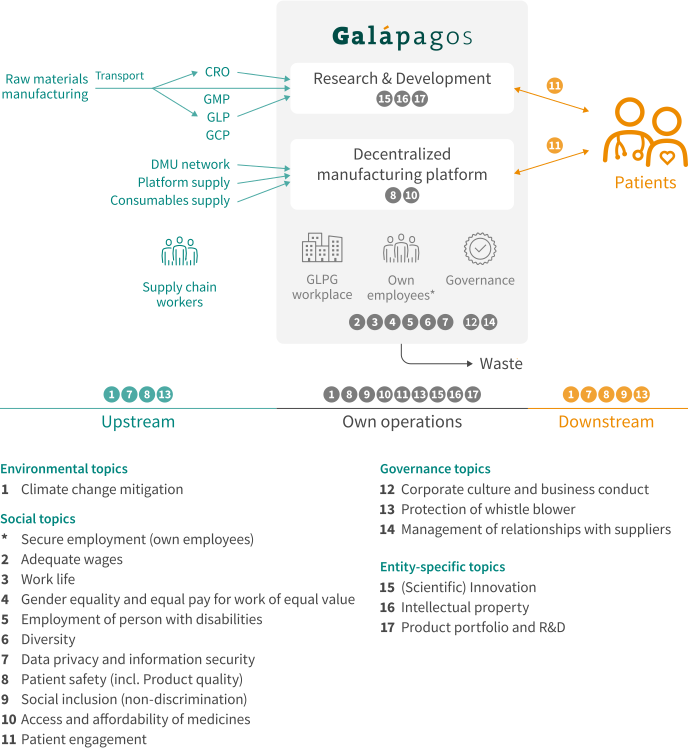
Assessing our value chain is a key element to our materiality assessment process and helps us better understand the broader impacts of both our upstream and downstream operations (see picture below). By identifying and collaborating with our value chain stakeholders (i.e., suppliers, partners, and other entities), we have gained valuable insights into key environmental, social, and economic impacts associated with our global operations. This collaborative approach enables us to identify areas where we can work together to reduce risks and identify opportunities. Additionally, monitoring our value chain helped us align more closely with stakeholder expectations and support responsible sourcing and transparency, while developing a clearer picture of the supply chain supporting our oncology R&D activities. This integrated perspective enabled us to make meaningful progress toward shared sustainability goals that extend beyond our own, immediate operations.
Our value chain map provides a foundation for better identifying and assessing our material impacts, risks, and opportunities within the global value chain.
Interests and views of stakeholders (SBM-2)
We engaged with a broad range of stakeholders, including patient organizations, health care providers, R&D organizations, employees, suppliers, and investors, to understand and take account of their perspectives in the development of our strategy and business model. Below we summarize key elements of our stakeholder engagement during the reporting period:
Stakeholder |
Engagement |
Purpose |
Outcomes |
|---|---|---|---|
Patient organizations |
Engagement continued through our Patient Engagement Council and Patient Partnership Charter, complemented by ongoing dialogue with patient groups through traditional feedback and advisory interactions. Activities were scaled back from Q2 onwards. |
To understand patient needs and perspectives, in line with the Patient Partnership Charter. |
Engagement continued until Q2 2025 and was subsequently scaled back as part of the reorganization. |
Health care providers |
Scientific exchange, advisory interactions, and research‑related collaboration; presentations at medical and research conferences. |
To obtain clinical insights and strengthen scientific understanding on treatment approaches and patient needs. |
Continued knowledge‑sharing and scientific dialogue. |
Employees |
Engagement through Works Councils in Belgium, and the Netherlands in the context of the restructuring. |
To ensure transparent dialogue with employee representatives, and to act responsibly and respectfully toward employees. |
Formal Works Council consultation completed. |
Suppliers |
Ongoing engagement through Third‑Party Risk Assessments (TPRA). |
To ensure a secure and reliable supply chain. |
Completion of supplier risk assessments. |
Investors |
Regular ESG‑related engagement throughout the year. |
To provide transparency. |
Constructive dialogue maintained. |
In addition to the surveys and interviews conducted as part of our double materiality assessment, we maintain an ongoing dialogue with our stakeholders through our sustainability and function leads. Our Board of Directors, Executive Committee, and Management Committee receive regular comprehensive updates on stakeholder expectations around sustainability topics, including ethical business conduct, social and environmental responsibility, ensuring that stakeholder concerns are considered in decision-making at all levels and reinforcing our commitment to sustainability.
The feedback we receive from our stakeholders through both the double materiality assessment and on an ongoing basis serves as critical input to our sustainability strategy. Additionally, in all other elements of our governance and sustainability program, particulary as part of our ongoing due diligence enable us to better align with our priority areas, such as patient engagement and employee-related topics.
Process to identify and assess material impacts, risks and opportunities (IRO-1)
In 2025, we refreshed our double materiality assessment (DMA) through an internal panel of subject matter experts to reflect the business changes arising from the strategic reorganization as announced on January 8, 2025, which impacted the materiality thresholds with regard to our number of employees and financial position and performance. This update built on our earlier work: an EFRAG‑aligned DMA completed in 2023, followed by a targeted refresh in 2024. The 2023 assessment marked our first full application of the European Corporate Sustainability Reporting Directive (CSRD) requirements, adding a financial materiality assessment to the impact materiality assessment initially undertaken in 2022. The DMA was carried out prior to the announcement of the intention to wind down the cell therapy activities, as such the DMA is to a large extent based on these activities. The DMA output was reviewed during 2025 to assess relevance for the 2025 Sustainability Statement, in the context of these changes to the business.
Identifying Topics and Impacts, Risks, and Opportunities
For the impact materiality assessment, our stakeholder engagement process formed the basis for identifying actual and potential impacts across our value chain. A team of internal subject‑matter experts assessed these impacts. Each topic was evaluated for whether the impact was actual or potential, positive or negative, and then scored on a 1–5 scale based on severity (scale, scope, and irremediability) and likelihood. Likelihood was scored from 1 (very unlikely) to 4 (very likely). The severity of the impact has been considered in terms of:
Scale: How grave or beneficial our impact is, from 1 (low) to 5 (high);
Scope: How widespread our impact is, from 1 (affecting only internal stakeholders) to 5 (affecting communities at country level or beyond); and
Irremediability: For negative impacts, whether and to what extent the impact could be remediated, from 1 (harm easily rectified) to 5 (harm long‑lasting and difficult to remedy)
Input from the stakeholder engagement process conducted in the 2022 materiality assessment was used to support the evaluation of impact pathways and expectations. The impact materiality threshold was set at 9, and the completeness of the assessment was validated by internal experts.
For the financial materiality aspect of the double materiality assessment, we assessed the financial risks and opportunities associated with each sustainability topic, including potential financial effects reflected in our financial statements. Thresholds for assessing financial materiality were based on expected effects on financial position and performance, cash flows, and access to and cost of capital. Each risk and opportunity was evaluated for both its likelihood and potential magnitude of financial effect, using a scoring scale from 1 (very unlikely) to 4 (very likely) for likelihood and from 1 (negligible) to 5 (extreme) for severity. These assessments considered the predefined short, medium and long-term time horizons. Identified sustainability-related risks and opportunities were aligned with our internal Risk Register, and the materiality threshold was set at 8. This methodology was applied to all sustainability topics, including climate‑related ones; however as mentioned in E1-Climate change, we did not perform a detailed climate risk analysis.
The 2025 re-assessment was reviewed and validated by internal functions:
HR
Legal
Finance/internal controls
Head of GxP Quality Systems and Compliance
Sustainability ESG lead
Animal Welfare Officer
Data Privacy
Information Security and Risk management
Head of EHS
Global Head Quality Risk Management
Assessing Our Results
The outputs of our 2025 double materiality assessment were reviewed by internal subject‑matter experts to validate completeness, consistency, and relevance. Building on the stakeholder insights that informed the impact materiality assessment and the financial analyses aligned with our risk register, we confirmed the final list of material topics for inclusion in the 2025 Sustainability Statement. For the impact materiality portion of the assessment, a team of internal experts reviewed the topics identified by stakeholders and the associated scoring outcomes. For the financial materiality aspect, we validated the financial risks and opportunities identified, including potential financial effects incorporated in our financial statements. This review covered all sustainability topics.
Disclosure requirements in ESRS covered by the sustainability statement
Following the outcome of our 2025 double materiality assessment, we compiled a list of the Disclosure Requirements that are included in this Sustainability Statement, together with paragraph references to where each disclosure can be found (see Disclosure requirements in ESRS covered by the sustainability statement). We mapped ESRS mandatory disclosure requirements and data points to the material IROs to assess information materiality within the topical standards. The material IROs map to the following topics, which forms the basis of preparation for this sustainability statement: E1 – Climate Change, S1 – Own Workforce, S4 – Consumers and End-users, G1 – Business Conduct and entity-specific topics including scientific innovation, intellectual property, and product portfolio & R&D. Where no link to a material IRO was identified, the relevant disclosures were omitted. This is presented in the ESRS Content Index at the end of this report, which indicates where we have applied phased-in provisions, disclosures incorporated by reference or where a disclosure requirement is not applicable.
Material impacts, risks, and opportunities and how they interact with our strategy and business model (SBM-3)
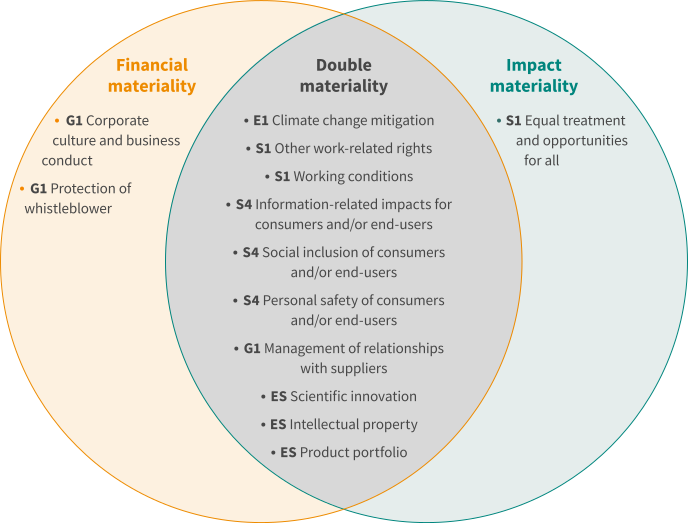
The material topics identified through our 2025 double materiality assessment refresh are summarized in the matrix below. These reflect the outcomes of the refresh carried out with internal subject‑matter experts following the announcement on October 21, 2025 of the intention to wind down the cell therapy activities and the initiation of implementation in early 2026. For detailed descriptions of our material impacts, risks, and opportunities, including the expected time horizons, whether impacts are positive or negative, and where in our value chain these occur, see the relevant topical sections. While the substance of our IROs remains largely consistent with the prior year, several descriptions were updated to improve clarity and ensure closer alignment with ESRS terminology and structure. There, we also describe our responses to the material impacts, risks, and opportunities identified, as well as how these topics connect to our strategy and business model.
Four ESRS topical standards were determined to be material for the reporting year: E1 Climate Change, S1 Own Workforce, S4 Consumers and End‑Users, and G1 Business Conduct. In addition, three entity‑specific material topics were identified during the reporting period: Scientific Innovation, Intellectual Property, and Product Portfolio and R&D.
In 2025, compared with the previous reporting period, the S1 sub‑topic Secure Employment was newly identified as material from both an impact and financial materiality perspective, resulting in two new material IROs that were not considered material in 2024. The topic of patient engagement, previously treated as an entity‑specific topic in the prior reporting period, was reassigned to ESRS S4 – Consumers and End‑Users this year, as it more closely aligns with the scope and definitions of the standard.
The graphic below presents an overview of all the sub-topics that have been determined to be material for us:
Given the wind-down of operating activities and resulting change in long-term strategic direction of the business, no resilience analysis has been carried out in 2025 regarding our capacity to address its material impacts and risks and to take advantage of its material opportunities.
a) Identifying and assessing adverse impacts |
Double Materiality assessment |
|---|---|
b) Taking actions to address those adverse impacts |
S1 – Own workforce – Mitigating, Preventing and Remediating Actions |
c) Tracking the effectiveness of these efforts and communicating |
S1 – Own workforce – Mitigating, Preventing and Remediating Actions |